
Responsible Gambling: How to Bet Safely and Stay in Control
Table of Contents Show
Responsible gambling means using betting products with clear limits, full awareness of risk, and control over money, time, and behavior. Betting should stay entertainment only. Users must set limits before betting and must never use money needed for rent, food, debt, bills, family expenses, loans, education, medical needs, or emergency savings. No sportsbook, casino game, betting strategy, prediction tool, tipster, bonus, or bookmaker review can guarantee profit. Users should use responsible gambling tools such as deposit limits, loss limits, session limits, cooling-off periods, and self-exclusion. Users should seek help if betting causes stress, debt, secrecy, conflict, panic, or loss of control.
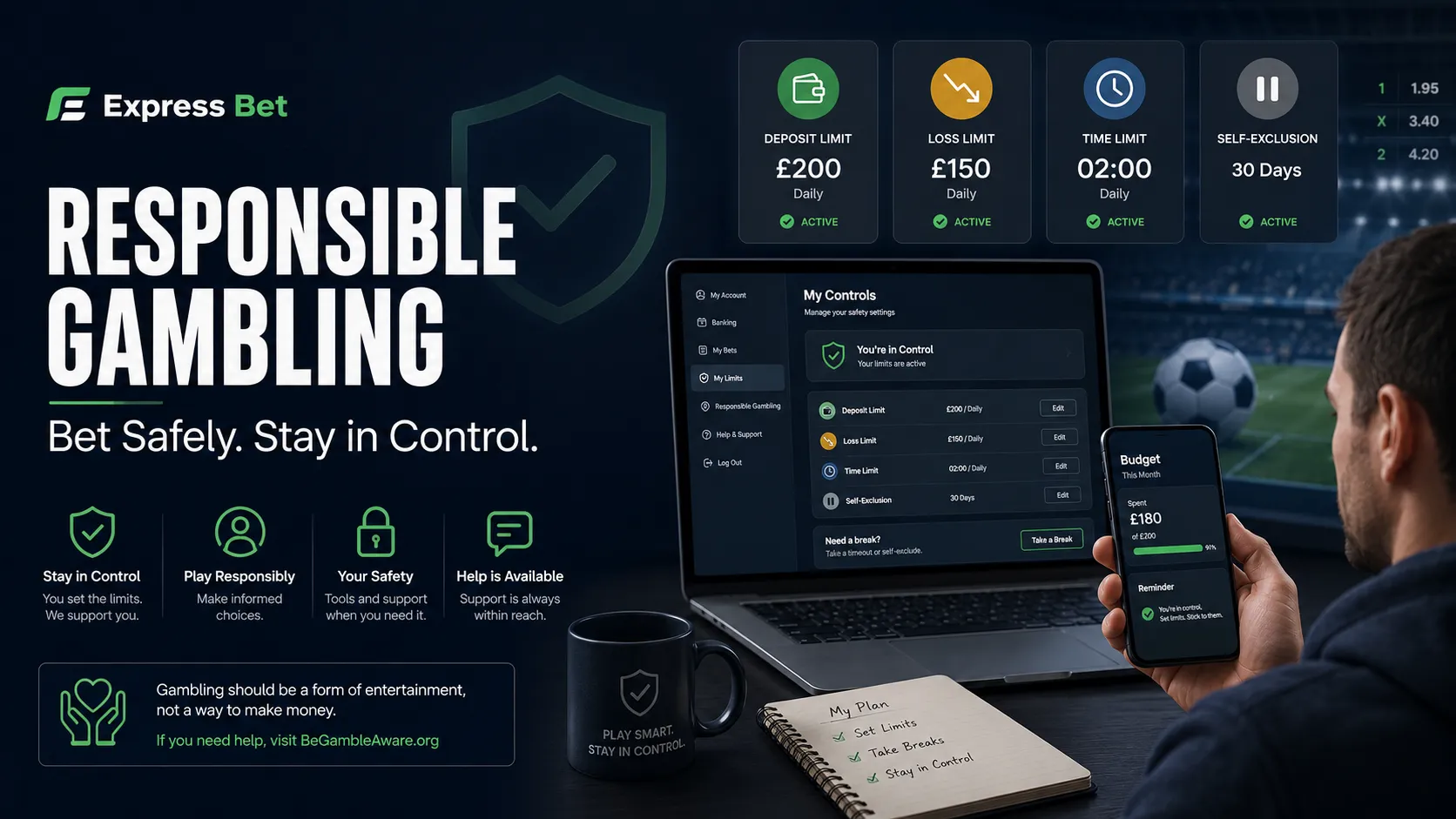
Responsible gambling means making betting decisions with limits, caution, and control. It means users treat betting as paid entertainment, not income. It also means users understand that losses are possible and that no betting outcome is guaranteed.
Gambling has financial and psychological risks. A small habit can become harmful when users chase losses, hide betting, borrow money, exceed limits, or bet under stress. Live betting, casino games, crash games, esports markets, and accumulator bets can increase pressure because they move quickly and encourage repeated decisions.
Users need limits before betting. Deposit limits, loss limits, wagering limits, session limits, time-out tools, cooling-off periods, and self-exclusion can help users stop before betting becomes uncontrolled. These tools do not make gambling safe or profitable. They reduce risk and support control.
Users should avoid betting while angry, stressed, tired, drunk, high, under debt pressure, or emotionally attached to a team, fighter, player, or match. Emotional betting often leads to poor decisions.
Users must check local gambling laws and legal betting age before using any bookmaker, sportsbook, casino, or betting app. Third-party bookmakers have their own terms, privacy policies, age verification rules, KYC rules, payment rules, bonus rules, and responsible gambling tools.
Users should seek help early. Gambling harm often grows in silence. Early action is better than waiting until debt, stress, or secrecy becomes severe.
Responsible gambling means using betting products in a controlled and informed way. It means users understand the risks, set limits, and stop when betting no longer feels safe or enjoyable.
Responsible gambling includes:
Responsible gambling does not make betting safe. It does not make betting profitable. It does not remove bookmaker margin, random outcomes, live market swings, or user error. It only reduces risk and helps users maintain control.
A responsible user decides the maximum amount before betting. The user accepts that the money may be lost. The user does not redeposit after a losing session. The user does not use gambling to solve stress, debt, boredom, loneliness, anger, or financial pressure.
Responsible gambling matters because betting can create financial harm, emotional stress, secrecy, and loss of control. Harm can develop slowly. A user may start with small bets and later increase stakes, open more accounts, chase losses, or use money meant for essential expenses.
Fast betting products can increase impulsive behavior. Live betting moves quickly. Casino games can settle in seconds. Crash games and instant games can produce repeated decisions in a short period. Bonuses can encourage users to deposit more than planned.
Affiliate reviews and bookmaker comparisons can also influence decisions. A positive review does not remove risk. A bonus does not make betting safe. A high rating does not guarantee withdrawals, winning outcomes, or personal control.
Users must make their own decisions. They must know when to stop.
Expert note:
Responsible gambling starts before the first bet, not after the first loss.
The safest time to set limits is before money enters a betting account. Limits set after losses often reflect emotion, not planning.
Betting is not a source of income. Betting outcomes are uncertain. Sports results, casino outcomes, esports matches, live markets, and player props can all lose.
Bookmakers build a margin into odds. This margin gives the bookmaker a long-term pricing advantage. A user can win a bet, but that does not mean the user has a reliable income method.
Odds do not guarantee value. A short price can lose. A high price can be poor value. A “safe pick” can fail. A favorite can lose. A prediction tool can be fake. A tipster can be wrong. A bookmaker bonus can include restrictive terms.
Betting should never replace work, savings, investment, or financial planning. Users must not bet with money needed for essential expenses.
Never bet money needed for:
A simple rule works best: if losing the stake would create stress, debt, conflict, or missing payments, do not bet.
Different betting products create different risks. Users should understand these risks before using any bookmaker or casino platform.
| Product Type | Main Risk | Why It Can Become Harmful |
|---|---|---|
| Sports betting | Uncertain match outcomes | Users may overestimate knowledge of teams or players |
| Live betting | Fast odds movement | Users may react emotionally after goals, wickets, cards, or knockouts |
| Esports betting | Map swings and limited data | Users may trust fake predictors, leaks, or signal groups |
| Casino games | Rapid rounds | Losses can build quickly in a short session |
| Crash games | Fast cash-out pressure | Users may chase multipliers and repeat bets quickly |
| Slots | High variance | Long losing streaks can happen quickly |
| Bonuses | Wagering requirements | Users may deposit more to unlock or complete offers |
| Accumulators | One failed leg loses the ticket | Higher payout expectations can hide higher failure risk |
| Emotional betting | Loyalty or stress | Users may bet because of feelings, not analysis |
| Misinformation | Fake tips and claims | Users may trust “guaranteed win” scams |
Sports betting risk often comes from overconfidence. Casino gambling risks often come from speed. Live betting risk often comes from emotion and pressure. Bonus risk often comes from hidden conditions and overbetting.
Gambling harm can appear through behavior, money problems, secrecy, stress, and loss of control. One warning sign deserves attention. Several warning signs require immediate action.
| Warning Sign | What It May Mean | What To Do |
| Betting more than planned | Limits are not working | Stop betting and review the budget |
| Chasing losses | Loss control has weakened | Take a cooling-off period |
| Hiding betting | Shame or secrecy is developing | Talk to someone trusted |
| Borrowing money | Betting has crossed into financial harm | Stop and seek support |
| Lying about betting | Gambling is affecting relationships | Use exclusion tools and get help |
| Betting during work or study | Betting is disrupting life | Set time blocks or stop |
| Betting under stress | Gambling is being used to cope | Replace betting with support or rest |
| Panic after losses | Losses exceed emotional tolerance | Stop immediately |
| Anger after losses | Emotional control is weak | Take a break before any decision |
| Inability to stop | Gambling control is impaired | Use self-exclusion |
| Using multiple accounts | Limits may be bypassed | Close accounts and seek help |
| Using credit or loans | Financial risk is escalating | Stop betting and contact support |
| Selling belongings | Severe financial harm may exist | Seek urgent help |
| Neglecting family | Gambling is damaging priorities | Talk to family or counselor |
| Sleep problems | Betting is affecting health | Stop and seek support |
| Betting to escape emotions | Gambling is being used as coping | Use non-gambling support |
| Using casino games to recover losses | Chasing behavior is active | Stop all gambling |
| Feeling guilty after betting | Betting conflicts with values or limits | Reduce or stop activity |
Users should act early. Gambling harm often grows when users wait, hide losses, or try to “win it back.”
A betting budget is money set aside only for entertainment betting. It must be separate from life money.
Users should decide the budget before betting. They should treat the budget like money spent on a movie, game, or meal. Once the money is gone, the entertainment spending is finished.
If a user sets a monthly betting budget of $50, they should stop after the $50 is spent. They should not add another $50 because a new match starts.
| Budget Rule | Practical Action |
| Separate betting money | Keep betting funds away from rent, food, debt, and bills |
| Set the amount before betting | Decide weekly or monthly maximums in advance |
| Assume losses are possible | Treat the full budget as entertainment spending |
| Never exceed the limit | Stop when the budget is spent |
| Avoid redepositing | Do not add money after losses |
| Track every bet | Write down stake, market, result, and reason |
| Review honestly | Check whether betting follows the plan |
| Use limits | Set deposit and loss limits on bookmaker accounts |
A budget only works if the user respects it. A written budget is stronger than a vague promise.
A bankroll is the amount of money reserved only for betting. Bankroll management means controlling stake size so one bet or one session cannot damage the full budget.
A unit is a standard stake. Many cautious users use 0.5% to 1% of bankroll per normal bet. Higher-risk markets should use smaller stakes.
| Bankroll Size | 1% Stake | High-Risk Bet Suggested Stake |
| $50 | $0.50 | $0.10–$0.25 |
| $100 | $1.00 | $0.25–$0.50 |
| $250 | $2.50 | $0.50–$1.25 |
| $500 | $5.00 | $1.00–$2.50 |
| $1000 | $10.00 | $2.50–$5.00 |
High-risk bets include:
Users should avoid all-in bets. They should avoid emotional stake increases after losses. They should stop after reaching a loss limit.
A betting bankroll should never sit inside the user’s main bank account. Users need a psychological and practical boundary between life money and betting money.
Deposit limits restrict how much money a user can add to a betting account during a set period. Bookmakers may offer daily, weekly, or monthly deposit limits.
Deposit limits help users prevent uncontrolled redeposits. They work best when set before betting starts.
Examples:
A user should not raise a deposit limit after a losing session. Raising limits after losses often means the user is trying to chase. Some bookmakers may apply a delay or cooling period before increases take effect, depending on platform rules and local regulation.
A strict deposit limit turns a vague budget into an account-level barrier.
Loss limits restrict how much a user can lose during a set period. They can apply daily, weekly, or monthly.
Loss limits matter because they stop uncontrolled losing sessions. A user may begin with a small stake and then increase bet size after losses. A loss limit creates a stopping point.
Example stop-loss rule:
A user has a $100 monthly betting bankroll and sets a daily stop-loss of $5. If the user loses $5 in one day, the user stops betting until the next planned session.
Users should stop immediately after reaching the limit. A loss limit is not a challenge. It is a safety boundary.
Wagering limits restrict how much a user can stake per bet, per day, or per session. They reduce the chance of one impulsive bet damaging the full bankroll.
Responsible wagering limits can include:
Users should avoid high-stake impulsive bets. They should avoid increasing stakes because a match feels “certain.” No match is certain.
Small unit sizes help users survive losing streaks without panic.
Session limits control time spent on betting platforms. Long sessions can create fatigue, stress, and impulsive decisions.
Users can use:
Late-night betting can increase poor decisions. Betting during work, study, driving, or family time can signal loss of control.
A user should decide the session length before logging in. When the planned time ends, the user should stop even if a new match starts.
Time control matters as much as money control.
A cooling-off period is a short break from betting. A time-out tool can block access for a day, week, month, or other period depending on bookmaker settings.
Users should use cooling-off tools when:
Taking a break is better than chasing losses. During a break, users should avoid betting content, odds pages, tipster groups, and casino apps. They should replace betting with rest, exercise, work, family time, or support.
A cooling-off period is not a failure. It is a control tool.
Self-exclusion blocks access to gambling accounts or gambling services for a set period. It can apply to one bookmaker or to a national or regional system where available.
Self-exclusion can help users who cannot control betting with normal limits.
Users may check [Self-Exclusion Register] or [Regulator Website] where available.
Self-exclusion may include:
Users should not try to bypass self-exclusion. Opening new accounts, using another person’s account, using fake details, or switching platforms can worsen harm.
If control is weak, self-exclusion should be treated as a necessary safety step.
Betting is not for minors. Users must meet the legal betting age in their country or region before using betting platforms or accessing gambling-related services.
Legal age depends on local law. Some regions have different rules for sports betting, casino gambling, lotteries, esports betting, or online gambling.
Express Bet content is intended only for users who may legally access betting-related information in their location.
Parents and guardians should use parental controls where needed. Minors must not register with betting platforms. Bookmakers may require age verification, identity verification, and KYC checks.
Underage gambling can create serious harm. It should be blocked, not normalized.
Online betting laws vary by country, state, province, and region. Some places restrict or prohibit online betting. Some places allow only licensed operators. Some places regulate sports betting but restrict casino gambling. Some places treat offshore betting differently from local betting.
Users must check local gambling laws before betting. Express Bet does not provide legal advice.
Users should use legal and licensed operators where applicable. They should read bookmaker terms, payment rules, bonus terms, withdrawal rules, privacy policies, and responsible gambling pages before opening accounts.
Legal access does not mean betting is harmless. It only means access may be allowed under local rules.
Users should verify current responsible gambling resources, legal requirements, and support contacts in their own country or region before relying on them.
Express Bet may publish bookmaker reviews, sportsbook comparisons, betting guides, event betting content, esports betting pages, and casino-related informational content.
These reviews are informational. Ratings and comparisons do not guarantee safety, winnings, fair outcomes, fast withdrawals, or personal control.
Before registering with any bookmaker, users should verify:
Users should not register only because a review is positive. Users should not deposit only because a bonus looks large. Users should not choose a bookmaker without checking whether it is legal and suitable for their location.
Express Bet may use affiliate links. The website may receive commission from third-party operators when users click links, register, deposit, or complete qualifying actions.
Affiliate relationships should not influence user responsibility. A user must still check legal eligibility, age requirements, bookmaker terms, privacy policy, payment conditions, withdrawal rules, and responsible gambling tools.
Users should avoid opening accounts on multiple sites to chase bonuses. Bonus chasing can increase deposits, increase time spent betting, and weaken control.
No affiliate link, bonus, review, or bookmaker ranking should be treated as a reason to gamble more than planned.
Responsible gambling must remain stronger than any promotion.
Bonuses can look attractive, but they can increase risk. A bonus may encourage a user to deposit more, bet more often, or choose markets they would normally avoid.
Common promotions include:
| Bonus Feature | User Risk |
| Wagering requirements | Users may bet more than planned to unlock funds |
| Minimum odds | Users may choose riskier bets |
| Expiry dates | Users may rush decisions |
| Maximum winnings | Expected value may be lower than it appears |
| Restricted markets | Users may misunderstand eligible bets |
| Deposit matching | Users may deposit more than their budget |
| Accumulator boosts | Users may combine too many risky selections |
| Cashback | Users may accept losses as normal |
| Free bets | Users may still chase after losing them |
Users should read bonus terms before accepting any offer. A large bonus with strict rules can be worse than no bonus.
Live betting allows users to bet during an event. It can be risky because odds move quickly and users may react emotionally.
One goal, wicket, knockout, red card, map swing, round result, injury, penalty, VAR decision, or tactical change can move live odds instantly.
Live betting risks include:
Users should use smaller stakes or avoid live betting. A user who has just lost a bet should not immediately open live markets to recover.
Live betting can turn one planned bet into a long uncontrolled session.
Casino games can move faster than sports betting. Slots, roulette, blackjack, baccarat, crash games, instant games, and live casino products can produce many rounds in a short time.
Rapid rounds can cause faster losses. A user can lose a planned budget in minutes if limits are not active.
Using casino games to recover sports betting losses is dangerous. Sports betting losses and casino gambling risks should not mix.
Users should:
Casino games should never become a recovery tool.
Esports betting includes titles such as CS2, Dota 2, League of Legends, Valorant, Mobile Legends, and other games. Esports markets can include match winner, map winner, round markets, player props, live betting, and tournament outrights.
Fake predictors and signal groups often target esports users. They may claim to have leaked scripts, fixed matches, private odds tools, or guaranteed signals. These claims are unsafe.
No tool can guarantee match outcomes.
Users should avoid:
If a product promises guaranteed wins, it is a red flag.
A losing streak can create pressure. The correct response is to stop, not increase risk.
Practical steps:
A losing streak does not prove the next bet will win. It does not create a “due” result. Betting more after losses usually increases harm.
Gambling harm often grows in secrecy. Talking to someone can reduce shame, pressure, and isolation.
Users can speak with:
Users should not wait until debt becomes severe. Early support is easier than crisis response.
If you need immediate support, contact [Local Emergency Number] or [Country-Specific Support Resource].
If a user feels unsafe, overwhelmed, or unable to control actions, urgent support is needed.
Users may contact Express Bet about gambling harm, bookmaker tools, or responsible gambling content. These communications may contain personal data.
Express Bet should not request unnecessary sensitive data. Users should avoid sending financial documents, identity documents, betting account screenshots, or private health details unless necessary and secure.
Third-party bookmakers process responsible gambling data under their own privacy policies. This may include deposit limits, self-exclusion records, KYC data, payment information, and account activity. Users should read bookmaker privacy policies before opening accounts.
Responsible gambling support should respect privacy, but users should understand that privacy rules differ by country and platform.
Before betting, users should check:
A checklist helps users act before emotions take control.
Example plan:
This plan reduces risk because it sets limits before betting starts. It prevents large stakes, blocks redeposits, separates high-risk markets, and adds a break after emotional losses.
This plan does not guarantee safety or profit. A user can still lose money. If the user cannot follow the plan, the user should stop betting and use stronger tools such as self-exclusion.
Different betting types need different controls.
Football betting can include match winner, total goals, both teams to score, cards, corners, player props, and live betting. Accumulators are common and risky because one failed leg loses the full ticket.
Users should avoid large accumulators and emotional bets on favorite teams.
Cricket betting can include match winner, toss markets, total runs, player runs, player wickets, live run rate, DLS/rain risk, and innings markets. Toss betting is especially random. Live cricket odds can change quickly after wickets, big overs, rain delays, or required run-rate swings.
Users should use smaller stakes for live cricket markets and player props.
UFC betting can include moneyline, method of victory, exact round, over/under rounds, fight goes the distance, and live fight markets. One strike, submission, injury, or judge decision can change the result.
Users should avoid large stakes on exact round and method-of-victory markets. Emotional fighter loyalty can create poor decisions.
Esports betting can include match winner, map winner, round markets, player props, and live markets. Odds can swing quickly after map changes, economy shifts, draft phases, or team fights.
Users should avoid fake predictors, signal scams, and fixed-match claims.
Casino and crash games can move quickly. Fast rounds can create rapid losses. Crash games can encourage users to chase higher multipliers. Slots can produce long losing runs.
Users should never use casino or crash games to recover sports betting losses.
Stop betting immediately if:
These signals mean betting is no longer controlled entertainment.
Support resources vary by country and region. Users should verify current local resources.
Users may contact:
If debt, stress, or secrecy is already present, help should not be delayed. If the user feels unsafe or overwhelmed, they should contact [Local Emergency Number] or [Country-Specific Support Resource].
Express Bet supports responsible gambling and responsible sportsbook use.
Express Bet provides informational content only. The website may publish bookmaker reviews, betting guides, comparison pages, affiliate links, sports betting content, esports betting content, casino-related informational sections, and responsible gambling information.
Express Bet does not guarantee bookmaker safety, winnings, withdrawals, or user outcomes. Express Bet does not promise profit. Express Bet may receive commission through affiliate links.
Users remain responsible for checking:
Users should stop betting if control weakens. Users should seek help if betting creates stress, debt, secrecy, conflict, or loss of control.
Responsible gambling means betting with clear limits, awareness of risk, and control over money and time. It means betting remains entertainment and does not harm finances, work, family, or mental health.
No. Betting is not a reliable income source. Outcomes are uncertain, bookmaker margin exists, and no strategy or tipster can guarantee profit.
Only bet money that you can afford to lose without affecting rent, food, bills, debt, family, education, medical costs, or savings. Many cautious users stake 0.5% to 1% of their betting bankroll per normal bet.
A betting budget is a fixed amount of entertainment money set aside before betting. Once the budget is spent, betting should stop.
Bankroll management means controlling stake size and total betting funds. It helps prevent one bet, one match, or one session from damaging the full budget.
A deposit limit restricts how much money a user can add to a betting account during a set period, such as daily, weekly, or monthly.
A loss limit restricts how much a user can lose during a set period. It helps stop uncontrolled losing sessions.
Self-exclusion blocks a user from gambling through a bookmaker or exclusion system for a set period. It should be used when control is weak.
A cooling-off period is a temporary break from betting. It can help users stop emotional decisions after losses, stress, or overuse.
Warning signs include chasing losses, hiding betting, borrowing money, lying about betting, using bill money, betting under stress, losing sleep, feeling guilty, and being unable to stop.
Chasing losses usually leads to larger stakes, worse decisions, and deeper losses. A previous loss does not make the next bet more likely to win.
No. Users should never bet with borrowed money, credit, loans, or money needed for essential expenses.
Yes. Bonuses can encourage overbetting. Wagering requirements, minimum odds, expiry dates, restricted markets, and maximum winnings can make bonuses harder to use than they appear.
Live betting can be riskier because odds move quickly and users may react emotionally. Stream delay and market suspension can also increase risk.
Casino games can move faster than sports betting. Rapid rounds can create faster losses. Users should never use casino games to recover sports betting losses.
No. Prediction tools, tipsters, bots, signals, and fixed-match claims cannot guarantee wins. Many are scams.
Stop betting. Do not increase stake. Do not redeposit. Take a cooling-off period. Review bet history later. Use self-exclusion or support resources if losses create stress or debt.
Speak calmly. Avoid blame. Encourage the person to stop betting, use limits or self-exclusion, talk to support services, and seek financial or mental health help if needed.
No. Minors must not gamble or register with betting platforms. Users must meet the legal betting age in their location.
Affiliate links may earn commission for Express Bet, but they should not change user responsibility. No affiliate link, review, bonus, or ranking should be treated as a reason to gamble more than planned.
Express Bet is an informational website unless the site owner states otherwise. It may publish reviews, guides, comparisons, affiliate links, and responsible gambling content. Third-party bookmakers handle betting accounts and wagers.
Users may contact [Responsible Gambling Help Organization], [National Gambling Helpline], [Self-Exclusion Register], [Regulator Website], [Country-Specific Support Resource], a doctor, counselor, mental health professional, trusted person, or financial counseling service.
Responsible gambling means setting limits, understanding risk, checking local law, using bookmaker tools, avoiding chasing losses, avoiding borrowed money, and seeking help early. It also means treating betting as entertainment only.
No betting strategy, bookmaker, bonus, tipster, prediction tool, affiliate review, or ranking can guarantee profit. A user can make a careful decision and still lose.
Users should set deposit limits, loss limits, session limits, wagering limits, and cooling-off periods before betting. Users should use self-exclusion if control weakens. Users should stop betting immediately if gambling creates stress, debt, secrecy, conflict, or loss of control.
Betting must remain entertainment only. If it stops being controlled entertainment, it should stop.
[expert_review params=»JTdCJTIyY29sb3IlMjIlM0ElMjJncmVlbi0yJTIyJTJDJTIyZXhwZXJ0X2F2YXRhciUyMiUzQSUyMiUyMiUyQyUyMmV4cGVydF9uYW1lJTIyJTNBJTIyJTIyJTJDJTIyZXhwZXJ0X2xpbmslMjIlM0ElMjIlMjIlMkMlMjJleHBlcnRfaWQlMjIlM0ElMjIxJTIyJTJDJTIyZXhwZXJ0X3R5cGUlMjIlM0ElMjJleHBlcnRfaWQlMjIlMkMlMjJleHBlcnRfYXZhdGFyX2FsdCUyMiUzQSUyMiUyMiUyQyUyMmV4cGVydF9zaG93JTIyJTNBMSUyQyUyMmV4cGVydF9kZXNjcmlwdGlvbiUyMiUzQSUyMlNwb3J0cyUyMEJldHRpbmclMjBBbmFseXN0JTIwJTI2JTIwRWRpdG9yaWFsJTIwQ29udHJpYnV0b3IlMjIlMkMlMjJleHBlcnRfc2hvd19idXR0b24lMjIlM0ExJTJDJTIyZXhwZXJ0X3Nob3dfYnV0dG9uX3R5cGUlMjIlM0ElMjJwb3B1cCUyMiUyQyUyMmV4cGVydF9xdWVzdGlvbl9idXR0b25fdGV4dCUyMiUzQSUyMkFzayUyMFF1ZXN0aW9uJTIyJTJDJTIycXVlc3Rpb25fZXh0ZXJuYWxfbGluayUyMiUzQSUyMiUyMiUyQyUyMnBvcHVwX3VzZV9waG9uZSUyMiUzQTAlMkMlMjJleHBlcnRfdGl0bGUlMjIlM0ElMjJBdXRob3IlMjIlMkMlMjJleHBlcnRfc2hvd190aXRsZSUyMiUzQTElMkMlMjJleHBlcnRfdGV4dCUyMiUzQSUyMkFsZXglMjBNb3JnYW4lMjBpcyUyMGElMjBzcG9ydHMlMjBiZXR0aW5nJTIwYW5hbHlzdCUyMGFuZCUyMGVkaXRvcmlhbCUyMGNvbnRyaWJ1dG9yJTIwd2hvJTIwd3JpdGVzJTIwZGV0YWlsZWQlMjBib29rbWFrZXIlMjByZXZpZXdzJTJDJTIwYmV0dGluZyUyMGd1aWRlcyUyQyUyMHBsYXRmb3JtJTIwY29tcGFyaXNvbnMlMkMlMjBhbmQlMjByZXNwb25zaWJsZSUyMGdhbWJsaW5nJTIwZXhwbGFpbmVycy4lMjBIaXMlMjB3b3JrJTIwZm9jdXNlcyUyMG9uJTIwcHJhY3RpY2FsJTIwaW5mb3JtYXRpb24lMjBmb3IlMjB1c2VycyUyMHdobyUyMHdhbnQlMjB0byUyMHVuZGVyc3RhbmQlMjBob3clMjBiZXR0aW5nJTIwc2l0ZXMlMjBvcGVyYXRlJTIwYmVmb3JlJTIwdGhleSUyMHJlZ2lzdGVyJTJDJTIwZGVwb3NpdCUyQyUyMG9yJTIwY2xhaW0lMjBhJTIwYm9udXMuJTIyJTJDJTIycWElMjIlM0ElNUIlNUQlMkMlMjJxYV9zaG93X3RpdGxlJTIyJTNBMSUyQyUyMnFhX3RpdGxlJTIyJTNBJTIyJUQwJTkyJUQwJUJFJUQwJUJGJUQxJTgwJUQwJUJFJUQxJTgxJTIwJUQxJThEJUQwJUJBJUQxJTgxJUQwJUJGJUQwJUI1JUQxJTgwJUQxJTgyJUQxJTgzJTIyJTJDJTIyc2NvcmUlMjIlM0ElNUIlNUQlMkMlMjJzY29yZV9zdW1tYXJ5X3RleHQlMjIlM0ElMjIlMjIlMkMlMjJzY29yZV9zdW1tYXJ5X2F2ZXJhZ2UlMjIlM0EwJTJDJTIyc2NvcmVfbWF4JTIyJTNBJTIyNSUyMiUyQyUyMnNjb3JlX3N5bWJvbCUyMiUzQSUyMiUyMiUyQyUyMnNjb3JlX3RpdGxlJTIyJTNBJTIyJTIyJTJDJTIyc2NvcmVfc2hvd190aXRsZSUyMiUzQTAlMkMlMjJwbHVzZXMlMjIlM0ElNUIlNUQlMkMlMjJtaW51c2VzJTIyJTNBJTVCJTVEJTJDJTIycGx1c2VzX21pbnVzZXNfc2hvd190aXRsZSUyMiUzQTElMkMlMjJwbHVzZXNfbWludXNlc190aXRsZSUyMiUzQSUyMiVEMCU5RiVEMCVCQiVEMSU4RSVEMSU4MSVEMSU4QiUyMCVEMCVCOCUyMCVEMCVCQyVEMCVCOCVEMCVCRCVEMSU4MyVEMSU4MSVEMSU4QiUyMiUyQyUyMnBsdXNlc190aXRsZSUyMiUzQSUyMiUyMiUyQyUyMm1pbnVzZXNfdGl0bGUlMjIlM0ElMjIlMjIlN0Q=»]