
How to Set Limits: A Practical Responsible Gambling Guide
This How to Set Limits guide explains how users can set deposit limits, loss limits, stake limits, wagering limits, session limits, cooling-off periods, and self-exclusion before betting. It is for users who read sportsbook reviews, betting guides, or bookmaker comparisons and want practical control tools before placing bets. The main benefit is clearer money and time control. The main limitation is that limits cannot make betting safe or profitable if users ignore them. Before betting, check local law, legal age, bookmaker tools, payment rules, bonus terms, and support options.
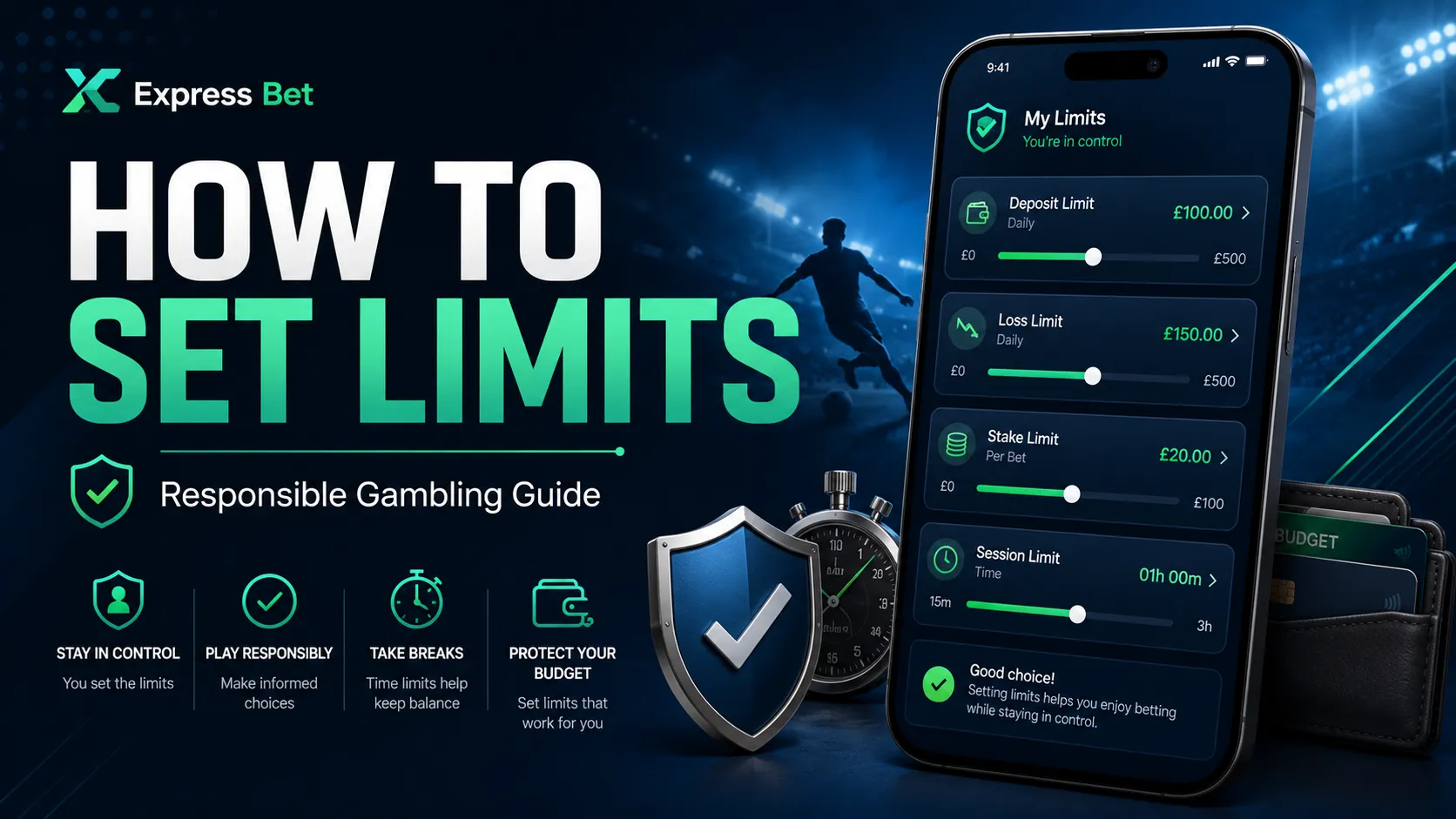
Quick Summary
Betting limits are money, time, and access boundaries that help users reduce gambling risk before they place bets. Limits can include deposit limits, loss limits, stake limits, wagering limits, session limits, cooling-off periods, time-out tools, and self-exclusion.
Limits should be set before betting starts. They work best when users are calm, not after a losing session. A user who sets limits before depositing has a clearer boundary. A user who tries to set limits after losses may already be reacting emotionally.
Deposit limits and loss limits are core responsible gambling tools. A deposit limit controls how much money can enter a betting account. A loss limit controls how much a user can lose in a set period. These tools help reduce repeated deposits and uncontrolled losing sessions.
Stake limits and wagering limits reduce impulsive decisions. A stake limit controls the maximum amount per bet. A wagering limit controls total betting activity. This matters because repeated small bets can still create high exposure.
Session limits control time risk. Betting can become harmful even when the money loss looks small. Long sessions can create fatigue, emotional decisions, and chasing behavior.
Cooling-off periods and self-exclusion matter when normal limits are not enough. A cooling-off period creates a temporary break. Self-exclusion creates a stronger block when control weakens.
Limits do not guarantee safety or profit. Betting still involves risk of loss. No deposit limit, loss limit, stake limit, bonus, prediction tool, tipster, or bookmaker ranking can remove risk.
Users must check legal betting age and local gambling laws before using any bookmaker. Users should seek help early if they cannot follow their own limits.
Key Takeaways
- Betting is entertainment, not income.
- Limits should be set before the first deposit.
- Deposit limits control how much money enters the account.
- Loss limits create a stopping point after losses.
- Stake limits reduce damage from one impulsive bet.
- Wagering limits control total activity.
- Session limits control time spent betting.
- Cooling-off tools help users pause after emotional betting.
- Self-exclusion may be needed when limits fail.
- Users must never bet essential or borrowed money.
- Users must stop if they cannot follow their own limits.
- Minors must not gamble.
What Are Betting Limits?
Betting limits are boundaries that control how much money, time, and access a user gives to betting. They are part of responsible gambling and responsible betting.
Limits can exist in two forms:
- account-level tools inside a bookmaker account;
- personal rules written by the user.
Account-level tools may include deposit limits, loss limits, wagering limits, session limits, time-out tools, cooling-off periods, and self-exclusion. Personal rules may include a written betting budget, maximum stake size, no live betting after losses, no casino after sports losses, and no redepositing after the planned budget is spent.
Different limit types serve different purposes.
| Limit Type | What It Controls | Example |
|---|---|---|
| Deposit limit | Money added to account | Maximum $50 per month |
| Loss limit | Money lost in a period | Stop after $5 daily loss |
| Stake limit | Maximum per bet | No bet above $1 |
| Wagering limit | Total betting activity | No more than $25 wagered per day |
| Session limit | Time spent betting | Stop after 30 minutes |
| Cooling-off period | Temporary break | No betting for 24 hours |
| Self-exclusion | Strong access block | Block account for set period |
Limits must be set before emotional betting starts. They are weaker when users create them after anger, panic, or chasing losses has already begun.
Limits reduce risk. They do not make betting safe, profitable, or fully controlled if users bypass them.
Why Setting Limits Matters
Betting can escalate without clear boundaries. A user may start with one small bet and then place more bets after a loss, goal, red card, wicket, knockout, or casino round. Without limits, the session can expand faster than planned.
Losses can trigger chasing behavior. Chasing losses means betting again mainly to recover money already lost. This is dangerous because a previous loss does not make the next bet more likely to win.
Live betting can create fast decisions. Odds move quickly, markets suspend, and users may react emotionally. Casino games can create rapid losses because rounds move faster than sports events. Bonuses can push users to deposit more than planned.
Written limits are stronger than vague promises. “I will be careful” is not a limit. “My monthly budget is $50, my daily loss limit is $5, and I stop after 30 minutes” is a clearer boundary.
Bookmaker tools can create friction before harm grows. A deposit limit can block extra deposits. A session limit can interrupt long betting periods. A cooling-off tool can stop emotional betting after losses.
Expert note:
Limits work best when they are set before the first deposit, not after the first losing session.
Betting Is Entertainment, Not Income
Betting is entertainment, not income. Betting outcomes are uncertain. A strong team can lose. A favorite can fail. A low-odds bet can lose. A casino game can produce long losing runs. A live betting market can change before the user reacts.
Bookmaker margin exists. This means odds include a pricing edge for the bookmaker. A user can win individual bets, but betting should not be treated as work, savings, investment, or financial planning.
No limit system creates profit. Limits are not betting strategies. They do not improve odds. They do not predict results. They do not remove risk.
Users should treat betting money as entertainment spending. The money should be money the user can lose without affecting life needs.
Never bet money needed for:
- rent;
- food;
- bills;
- debt;
- loans;
- family expenses;
- education;
- medical costs;
- emergency savings.
A simple rule applies: if losing the stake would create stress, conflict, debt, or missed payments, do not bet.
Step 1 — Create a Betting Budget
A betting budget is the maximum amount a user allows for betting during a set period. It should be weekly or monthly. It should be separate from life money.
A betting budget should be treated like entertainment spending. If the amount is lost, the user stops until the next budget period.
A user sets a monthly entertainment betting budget of $50. If the $50 is spent, the user stops until the next month. The user does not add more money because a new match, UFC card, cricket game, or casino promotion appears.
| Budget Step | Practical Action |
| Choose a period | Use weekly or monthly limits |
| Set an amount | Choose money that can be lost without harm |
| Separate funds | Keep betting money away from bills and savings |
| Assume loss | Treat the full budget as entertainment cost |
| Write it down | Use a note, spreadsheet, or app |
| Track bets | Record stake, market, result, and reason |
| Stop when spent | No redepositing after the budget is gone |
| Review later | Check whether behavior matched the plan |
The budget must not come from borrowed money, bill money, emergency savings, or family money.
Step 2 — Set a Deposit Limit
A deposit limit controls how much money a user can add to a bookmaker account during a set period. Deposit limits can be daily, weekly, or monthly.
Deposit limits should match the betting budget. If the monthly betting budget is $50, the monthly deposit limit should not exceed $50.
Users should set deposit limits before depositing money. This prevents a losing session from becoming a repeated deposit session.
Users should not raise deposit limits after losses. Raising limits after losses often means the user is trying to chase. Some bookmakers may apply cooling periods before limit increases, depending on platform rules and local regulation.
Lowering a limit should be easier than raising it. If a user feels pressure to raise a limit, that is a warning sign.
| Deposit Limit Type | Example | Best Use |
| Daily deposit limit | $5 per day | Prevents impulsive daily redeposits |
| Weekly deposit limit | $12.50 per week | Matches weekly entertainment plan |
| Monthly deposit limit | $50 per month | Matches full monthly budget |
| Temporary lower limit | $0 or very low amount | Useful after emotional betting |
| No-deposit period | No deposits for set days | Useful after limit breach |
A deposit limit does not control losses already inside the account. It controls how much money enters the account.
Step 3 — Set a Loss Limit
A loss limit controls how much a user can lose during a set period. It is different from a deposit limit.
A deposit limit controls money entering the account. A loss limit controls money lost from betting activity.
Loss limits can be daily, weekly, or monthly. A daily stop-loss rule is useful because it blocks one bad session from becoming a larger problem.
Example:
A user has a $100 bankroll and sets a daily loss limit of $5. If the user loses $5, betting stops for the day.
| Loss Limit Type | Example | Why It Helps |
| Daily loss limit | Stop after losing $5 | Prevents one bad day from expanding |
| Weekly loss limit | Stop after losing $15 | Controls weekly damage |
| Monthly loss limit | Stop after losing $50 | Protects the full budget |
| Sport-specific loss limit | Stop after $3 on live betting | Controls high-risk formats |
| Casino loss limit | Stop after $2 casino loss | Prevents fast-play damage |
Users should stop immediately after reaching the limit. A loss limit is not a target to beat. It is a stop signal.
Users should not try to recover the loss with live betting or casino games. That is chasing behavior.
Step 4 — Set a Stake Limit
A stake limit controls the maximum amount placed on one bet. It prevents one impulsive decision from damaging the bankroll.
A normal stake size should be small. Many cautious users use around 0.5% to 1% of bankroll for normal bets. High-risk bets should use smaller stakes.
| Bankroll Size | 1% Normal Stake | High-Risk Stake Range |
| $50 | $0.50 | $0.10–$0.25 |
| $100 | $1.00 | $0.25–$0.50 |
| $250 | $2.50 | $0.50–$1.25 |
| $500 | $5.00 | $1.00–$2.50 |
| $1000 | $10.00 | $2.50–$5.00 |
High-risk bets include:
- exact score;
- first goalscorer;
- player props;
- parlays;
- accumulators;
- live betting;
- casino games;
- crash games;
- UFC method of victory;
- UFC exact round;
- cricket toss betting;
- esports map props.
Users should avoid all-in bets. They should avoid increasing stake after a loss. They should not raise stake because a match feels certain, because a team is popular, or because a bonus is active.
A stake limit should be written before betting starts.
Step 5 — Set Wagering Limits
A wagering limit controls the total amount a user can bet during a set period. It is different from a loss limit.
A user may only lose $10 but wager $200 through repeated small bets. Wagering limits help control activity, not only net loss.
This matters for live betting, casino games, crash games, and esports markets because these products can create repeated decisions in a short period.
Example:
A user sets a daily wagering limit of $25. Once total stakes for the day reach $25, betting stops even if the user has not hit the loss limit.
Wagering limits reduce overactivity. They help users avoid turning one session into dozens of small bets.
Useful wagering rules:
- maximum total wagered per day;
- maximum total wagered per week;
- lower wagering limit for casino games;
- lower wagering limit for live betting;
- no wagering after a loss limit is hit;
- no wagering after the planned session ends.
A wagering limit is useful for users who place many small bets and underestimate total exposure.
Step 6 — Set Session Limits and Time Reminders
Session limits control how long a user spends betting. Time risk matters even when money loss looks small.
Long sessions can create fatigue. Fatigue can lead to careless bets, emotional reactions, missed rules, and chasing.
Session limits can include:
- maximum time per betting session;
- daily time limits;
- weekly time limits;
- session reminders;
- app notifications;
- forced logout where available;
- device timers.
| Time Limit Tool | Purpose |
| Session reminder | Shows how long the user has been active |
| Session limit | Stops or warns after a set time |
| Daily time limit | Controls total betting time per day |
| Weekly time limit | Controls long-term time exposure |
| Forced logout | Creates hard interruption |
| App timer | Blocks prolonged app use |
| Calendar block | Prevents betting during work or family time |
Users should avoid late-night betting. They should avoid betting during work, study, driving, or family time.
A user should decide the session length before opening the bookmaker account. When the time ends, betting stops.
Step 7 — Use Cooling-Off Periods and Time-Out Tools
A cooling-off period is a temporary break from betting. A time-out tool can block betting access for a short period or a longer set period, depending on the bookmaker.
A cooling-off period can last one day, several days, one week, one month, or another available period.
Users should use a cooling-off period if:
- they chased losses;
- they exceeded a limit;
- they felt angry after a loss;
- they deposited more than planned;
- they opened casino games after a sports betting loss;
- they hid betting from someone;
- they bet while drunk or high;
- they could not stop thinking about the next bet.
Taking a break is better than chasing losses. During the break, users should avoid odds pages, betting apps, casino sections, tipster groups, predictor tools, and bonus offers.
If urges continue during the break, the user should speak with a trusted person or contact gambling support resources.
A cooling-off period is not failure. It is a safety tool.
Step 8 — Use Self-Exclusion When Control Weakens
Self-exclusion is a stronger protection tool. It blocks access to a bookmaker account or gambling services for a set period.
Self-exclusion may be available at bookmaker level. Some countries or regions may also have national or regional self-exclusion registers.
Users may check [Self-Exclusion Register] or [Regulator Website] where available.
Self-exclusion should be considered when:
- a user repeatedly breaks limits;
- a user chases losses;
- a user borrows money to bet;
- a user hides betting;
- a user uses bill money;
- a user opens more accounts to continue;
- betting causes stress, debt, secrecy, or conflict.
If a user repeatedly breaks their own limits, self-exclusion may be necessary.
Users should not try to bypass self-exclusion. Using another person’s account, fake details, mirror sites, or new accounts can worsen harm.
How to Set Limits Inside a Bookmaker Account
Exact menu names differ by bookmaker. The general process usually follows similar steps.
- Log in to the bookmaker account.
- Open Account, Profile, Safer Gambling, Responsible Gambling, Player Protection, or Limits section.
- Choose the limit type.
- Select daily, weekly, or monthly period.
- Enter the amount or time.
- Confirm the setting.
- Save or screenshot the confirmation if useful.
- Check whether the change is immediate.
- Check whether increases require a cooling period.
- Review limits regularly.
Users should check these details before depositing:
- whether deposit limits are available;
- whether loss limits are available;
- whether wagering limits are available;
- whether session limits are available;
- whether cooling-off tools are available;
- whether self-exclusion is available;
- whether limit increases are delayed;
- whether limit decreases are immediate;
- how support handles responsible gambling requests.
A bookmaker that hides limit tools or makes them difficult to use is weaker from a player-safety perspective.
Personal Limits vs Bookmaker Tools
Personal limits and bookmaker tools are different. Stronger protection often uses several layers at once.
| Limit Layer | Example | Why It Helps |
| Personal written limits | Monthly budget and stake rules | Creates clear plan |
| Bookmaker account limits | Deposit and loss limits | Adds platform-level barrier |
| Banking limits | Payment blocks or card limits | Reduces deposit access |
| Device limits | App timers or site blockers | Controls time and access |
| Payment blocks | Gambling transaction blocks where available | Adds external protection |
| Self-exclusion tools | Account or national exclusion | Blocks access |
| Support contacts | Saved help resources | Makes help easier to use |
Personal rules are useful, but they depend on self-control. Bookmaker tools add friction. Banking tools add another layer. Self-exclusion adds stronger protection when other limits fail.
Limits for Sports Betting
Sports betting limits should cover pre-match bets, live bets, player props, accumulators, and event betting.
Practical rules:
- use normal unit size for simple markets;
- use smaller stakes for props and accumulators;
- avoid betting on every match;
- stop after the loss limit;
- avoid emotional team loyalty;
- do not raise stake because a match feels obvious;
- avoid betting when tired or angry.
Sports betting can look slower than casino gambling, but risk still exists. A long match schedule can create many betting decisions in one day.
Users should limit daily match volume. Betting on every available match usually means weaker decisions.
Limits for Live Betting
Live betting needs stricter limits because odds move fast. A user can react emotionally after a goal, wicket, red card, knockout, map swing, or VAR decision.
Risks include:
- fast odds movement;
- stream delay;
- market suspension;
- emotional decisions;
- repeated small bets;
- chasing after match events;
- betting during anger or panic.
Practical live betting rules:
- use smaller stake size;
- set a lower session time;
- avoid live betting after a loss;
- avoid live betting while angry;
- avoid live betting without a pre-set stop-loss;
- stop after one emotional decision;
- never use live betting to recover money.
Live betting should not be open-ended. It needs a hard time and money boundary.
Limits for Casino Games and Crash Games
Casino games and crash games can move faster than sports betting. A user can lose a full budget quickly without strict limits.
Casino products may include:
- slots;
- roulette;
- blackjack;
- baccarat;
- live casino;
- crash games;
- instant games.
Casino-specific limits should include:
- separate casino bankroll;
- separate casino deposit limit;
- lower session limits;
- smaller stake size;
- no casino after sports betting loss;
- no crash chasing;
- no extended slot sessions.
Casino games should never be used to recover sports betting losses. Switching to casino after a losing sports bet is a strong warning sign.
Crash games create cash-out pressure. Slots can produce long losing runs. Live casino can create repeated rapid decisions.
Strict limits are necessary.
Limits for Esports Betting
Esports betting includes CS2, Dota 2, League of Legends, Valorant, Mobile Legends, and other games.
Esports-specific risks include:
- map markets;
- live swings;
- roster changes;
- patches and meta changes;
- limited data;
- fake signal groups;
- predictor scams;
- live odds volatility.
Practical esports betting rules:
- use small stakes for map props;
- avoid fake signals;
- avoid live betting during emotional swings;
- do not chase after one map loss;
- check roster and patch context;
- avoid betting on matches with unclear team news.
No esports predictor, Telegram group, AI bot, or “inside leak” can guarantee results.
Limits for Football Betting
Football betting limits should address match winner, 90-minute result, goals markets, cards, corners, accumulators, and emotional team loyalty.
Football-specific risks include:
- draw risk;
- late goals;
- VAR decisions;
- cards and corners volatility;
- accumulator losses;
- national or club loyalty;
- confusion between 90-minute result and qualification markets.
Practical football betting rules:
- avoid oversized accumulators;
- use smaller stakes for correct score;
- understand 90-minute vs qualification markets;
- stop after the loss limit;
- avoid betting on a favorite team emotionally;
- avoid adding weak selections to raise accumulator odds.
A team can dominate and still draw. A late goal can change totals, handicaps, and correct score markets.
Limits for Cricket Betting
Cricket betting limits should account for toss markets, match winner, total runs, player runs, player wickets, live run rate, DLS/rain risk, and one-over volatility.
Cricket-specific risks include:
- toss randomness;
- fast live run-rate swings;
- wickets;
- weather interruptions;
- DLS/rain rules;
- player prop volatility;
- overreaction to one over.
Practical cricket betting rules:
- use tiny stakes or avoid toss betting;
- reduce live betting stakes;
- avoid overreacting to one over;
- stop during rain or DLS confusion if rules are unclear;
- use smaller stakes for player props;
- avoid chasing after a wicket changes the market.
A single over can shift live odds. This makes emotional betting more likely.
Limits for UFC Betting
UFC betting limits should account for moneyline, method of victory, exact round, over/under rounds, and live fight markets.
UFC-specific risks include:
- one-strike finish;
- submission risk;
- judging risk;
- method-of-victory risk;
- exact round risk;
- live fight volatility;
- emotional fighter loyalty.
Practical UFC betting rules:
- use smaller stakes for method and exact round;
- avoid live betting during emotional fight swings;
- do not increase stake because of fighter loyalty;
- understand that one strike or submission can end the fight;
- avoid large parlays across fight cards;
- stop after a controversial decision instead of chasing.
UFC markets can change instantly. A fighter can look dominant and still lose.
Limits for Bonuses and Promotions
Bonuses can push users to deposit more than planned. This makes bonus limits important.
Bonus types include:
- welcome bonus;
- free bet;
- reload bonus;
- odds boost;
- cashback;
- accumulator boost.
| Bonus Feature | Limit Needed |
| Welcome bonus | Deposit only within planned budget |
| Free bet | Do not add extra cash stakes to chase |
| Reload bonus | Do not redeposit only for promotion |
| Odds boost | Use normal stake limit |
| Cashback | Do not treat losses as harmless |
| Accumulator boost | Use smaller stake or avoid |
| Wagering requirements | Set maximum total wagering limit |
| Minimum odds | Avoid markets you do not understand |
| Expiry date | Do not rush bets |
| Maximum winnings | Check payout cap before betting |
| Restricted markets | Read eligible market rules |
A bonus should never make the user deposit more than the planned betting budget.
Users should skip a bonus if it conflicts with their limits.
How to Handle a Limit Breach
A limit breach means the user broke a planned boundary. This can include redepositing, betting after a loss limit, increasing stake, betting longer than planned, or using casino after a sports loss.
What to do:
- Stop betting immediately.
- Do not redeposit.
- Do not increase stake.
- Do not use casino games.
- Take a cooling-off period.
- Write down what happened.
- Reduce limits.
- Use self-exclusion if it happens again.
- Talk to someone trusted.
- Contact support if stress or debt appears.
Practical rule:
One broken limit is a warning. Repeated broken limits require stronger protection.
If a user cannot follow limits, the user should stop betting and use stronger tools.
Warning Signs That Limits Are Not Working
| Warning Sign | Meaning | Stronger Action |
| Raising deposit limits after losses | Chasing may be active | Freeze deposits or self-exclude |
| Ignoring loss limits | Stop signals are failing | Use cooling-off |
| Opening more accounts | User may bypass limits | Use wider self-exclusion |
| Borrowing money | Financial harm is present | Stop and seek support |
| Hiding betting | Secrecy is developing | Talk to someone trusted |
| Betting late at night | Fatigue may weaken control | Set device limits |
| Using bill money | Essential money is at risk | Stop immediately |
| Chasing losses | Harm risk is high | Take a break or self-exclude |
| Using casino to recover sports losses | Fast-play chasing | Block casino access |
| Feeling unable to stop | Control has weakened | Use self-exclusion |
| Thinking constantly about betting | Betting is becoming intrusive | Seek support |
| Trying to bypass self-exclusion | Serious warning sign | Contact support resources |
Limits are only useful when they are followed. If a user repeatedly works around limits, stronger action is needed.
Limit-Setting Checklist Before Betting
Before betting, users should check:
- local law checked;
- legal betting age confirmed;
- bookmaker license checked;
- payment rules checked;
- withdrawal rules checked;
- bonus terms checked;
- deposit limit active;
- loss limit active;
- stake limit written;
- wagering limit set;
- session limit active;
- cooling-off tool known;
- self-exclusion route known;
- support contacts saved;
- no borrowed money;
- no essential money;
- no chasing losses;
- privacy policy checked;
- KYC rules checked;
- account security checked.
If these checks are not complete, the user should not deposit.
Example Limit Plan for a Beginner
Example beginner plan:
- Monthly entertainment budget: $50
- Monthly deposit limit: $50
- Weekly deposit limit: $12.50
- Daily loss limit: $5
- Normal stake: $0.50
- High-risk stake: $0.10–$0.25
- Max live betting session: 20 minutes
- No casino after sports loss
- No redeposit rule
- 24-hour cooling-off period after emotional betting
- Self-exclusion if two limits are broken in one month
This plan reduces risk because it creates money limits, time limits, stake limits, and escalation rules before betting starts.
It does not guarantee safety or profit. A user can still lose. A user can still feel pressure. If the user cannot follow the plan, stronger protection is needed.
Where to Get Help
Support resources vary by country and region. Users should verify current local resources.
Users may contact:
- [Responsible Gambling Help Organization]
- [National Gambling Helpline]
- [Self-Exclusion Register]
- [Regulator Website]
- [Country-Specific Support Resource]
- a doctor;
- a counselor;
- a mental health professional;
- a trusted family member or friend;
- financial counseling services.
If you feel unsafe or overwhelmed, contact [Local Emergency Number] or [Country-Specific Support Resource].
Getting help early is better than waiting until debt, secrecy, or conflict becomes severe.
Users should verify current responsible gambling resources, legal requirements, bookmaker licensing status, and support contacts in their own country or region before relying on them.
Express Bet Limit-Setting Statement
Express Bet provides informational content only. Express Bet may publish bookmaker reviews, betting guides, comparison pages, affiliate links, responsible gambling content, and betting education.
Express Bet does not guarantee bookmaker safety, winnings, withdrawals, or user outcomes. Express Bet does not make betting safe or profitable.
Users remain responsible for checking:
- local law;
- legal betting age;
- operator terms;
- payment rules;
- withdrawal rules;
- bonus terms;
- privacy policies;
- KYC rules;
- responsible gambling tools.
Users should use limits before depositing money. Users should stop betting if control weakens. Users should seek support if betting creates stress, secrecy, debt, conflict, or loss of control.
FAQ
Betting limits are money, time, and access boundaries that help users control betting activity. They can include deposit limits, loss limits, stake limits, wagering limits, session limits, cooling-off periods, and self-exclusion.
Limits work best before emotions are involved. Setting them before betting helps prevent repeated deposits, larger stakes, chasing losses, and long sessions.
A deposit limit controls how much money a user can add to a bookmaker account during a set period, such as daily, weekly, or monthly.
A loss limit controls how much a user can lose during a set period. It creates a stop point during losing sessions.
A stake limit controls the maximum amount placed on one bet. It helps prevent one impulsive bet from damaging the bankroll.
A wagering limit controls the total amount a user can bet during a period. It helps reduce overactivity from repeated small bets.
A session limit controls how long a user spends betting. It helps prevent fatigue, emotional decisions, and long uncontrolled sessions.
A cooling-off period is a temporary break from betting. It can help users stop after emotional betting, limit breaches, or chasing behavior.
Self-exclusion is a stronger tool that blocks access to a bookmaker account or gambling services for a set period.
No. Limits reduce risk, but they do not guarantee safety. If users ignore or bypass limits, stronger protection may be needed.
A user should deposit only money that fits a written entertainment budget. Essential money and borrowed money must not be used.
A cautious normal stake is often around 0.5% to 1% of bankroll. High-risk markets need smaller stakes.
No. Raising limits after a loss often means chasing losses. Users should stop, take a cooling-off period, or reduce limits.
Stop betting immediately. Do not redeposit. Take a cooling-off period. Write down what happened. Use self-exclusion if limit breaches repeat
Yes. Live betting limits are important because odds move quickly and users may react emotionally to goals, wickets, red cards, knockouts, map swings, or VAR decisions.
Yes. Casino games can move faster than sports betting. Separate casino limits can reduce rapid-loss risk.
Bonuses can pressure users to deposit more or bet more than planned. A bonus should never override a betting budget.
Minors must not gamble. Betting platforms are not for users below the legal betting age in their location.
No. Express Bet is an informational website. Users must set limits directly through bookmaker tools, banking tools, device tools, or personal rules.
Users may contact [Responsible Gambling Help Organization], [National Gambling Helpline], [Self-Exclusion Register], [Regulator Website], [Country-Specific Support Resource], a doctor, counselor, trusted person, or financial counseling service.
No. Betting limits do not guarantee profit. They only reduce risk and help control money, time, and access.
Users should review limits regularly, especially after losses, emotional sessions, bonus use, live betting, casino play, or any limit breach.
Conclusion
Limits should be set before betting. Deposit limits, loss limits, stake limits, wagering limits, session limits, cooling-off tools, and self-exclusion can reduce harm.
Limits do not make betting safe or profitable. Betting is entertainment, not income. Every bet still carries risk of loss.
Users must not use borrowed money or essential money. They must not chase losses. They must check local law and legal betting age before using any bookmaker.
Users should stop immediately if they cannot follow their own limits. Repeated broken limits require stronger protection. Early help is a responsible action.
[expert_review params=»JTdCJTIyY29sb3IlMjIlM0ElMjJncmVlbi0yJTIyJTJDJTIyZXhwZXJ0X2F2YXRhciUyMiUzQSUyMiUyMiUyQyUyMmV4cGVydF9uYW1lJTIyJTNBJTIyJTIyJTJDJTIyZXhwZXJ0X2xpbmslMjIlM0ElMjIlMjIlMkMlMjJleHBlcnRfaWQlMjIlM0ElMjIxJTIyJTJDJTIyZXhwZXJ0X3R5cGUlMjIlM0ElMjJleHBlcnRfaWQlMjIlMkMlMjJleHBlcnRfYXZhdGFyX2FsdCUyMiUzQSUyMiUyMiUyQyUyMmV4cGVydF9zaG93JTIyJTNBMSUyQyUyMmV4cGVydF9kZXNjcmlwdGlvbiUyMiUzQSUyMlNwb3J0cyUyMEJldHRpbmclMjBBbmFseXN0JTIwJTI2JTIwRWRpdG9yaWFsJTIwQ29udHJpYnV0b3IlMjIlMkMlMjJleHBlcnRfc2hvd19idXR0b24lMjIlM0ExJTJDJTIyZXhwZXJ0X3Nob3dfYnV0dG9uX3R5cGUlMjIlM0ElMjJwb3B1cCUyMiUyQyUyMmV4cGVydF9xdWVzdGlvbl9idXR0b25fdGV4dCUyMiUzQSUyMkFzayUyMFF1ZXN0aW9uJTIyJTJDJTIycXVlc3Rpb25fZXh0ZXJuYWxfbGluayUyMiUzQSUyMiUyMiUyQyUyMnBvcHVwX3VzZV9waG9uZSUyMiUzQTAlMkMlMjJleHBlcnRfdGl0bGUlMjIlM0ElMjJBdXRob3IlMjIlMkMlMjJleHBlcnRfc2hvd190aXRsZSUyMiUzQTElMkMlMjJleHBlcnRfdGV4dCUyMiUzQSUyMkFsZXglMjBNb3JnYW4lMjBpcyUyMGElMjBzcG9ydHMlMjBiZXR0aW5nJTIwYW5hbHlzdCUyMGFuZCUyMGVkaXRvcmlhbCUyMGNvbnRyaWJ1dG9yJTIwd2hvJTIwd3JpdGVzJTIwZGV0YWlsZWQlMjBib29rbWFrZXIlMjByZXZpZXdzJTJDJTIwYmV0dGluZyUyMGd1aWRlcyUyQyUyMHBsYXRmb3JtJTIwY29tcGFyaXNvbnMlMkMlMjBhbmQlMjByZXNwb25zaWJsZSUyMGdhbWJsaW5nJTIwZXhwbGFpbmVycy4lMjBIaXMlMjB3b3JrJTIwZm9jdXNlcyUyMG9uJTIwcHJhY3RpY2FsJTIwaW5mb3JtYXRpb24lMjBmb3IlMjB1c2VycyUyMHdobyUyMHdhbnQlMjB0byUyMHVuZGVyc3RhbmQlMjBob3clMjBiZXR0aW5nJTIwc2l0ZXMlMjBvcGVyYXRlJTIwYmVmb3JlJTIwdGhleSUyMHJlZ2lzdGVyJTJDJTIwZGVwb3NpdCUyQyUyMG9yJTIwY2xhaW0lMjBhJTIwYm9udXMuJTIyJTJDJTIycWElMjIlM0ElNUIlNUQlMkMlMjJxYV9zaG93X3RpdGxlJTIyJTNBMSUyQyUyMnFhX3RpdGxlJTIyJTNBJTIyJUQwJTkyJUQwJUJFJUQwJUJGJUQxJTgwJUQwJUJFJUQxJTgxJTIwJUQxJThEJUQwJUJBJUQxJTgxJUQwJUJGJUQwJUI1JUQxJTgwJUQxJTgyJUQxJTgzJTIyJTJDJTIyc2NvcmUlMjIlM0ElNUIlNUQlMkMlMjJzY29yZV9zdW1tYXJ5X3RleHQlMjIlM0ElMjIlMjIlMkMlMjJzY29yZV9zdW1tYXJ5X2F2ZXJhZ2UlMjIlM0EwJTJDJTIyc2NvcmVfbWF4JTIyJTNBJTIyNSUyMiUyQyUyMnNjb3JlX3N5bWJvbCUyMiUzQSUyMiUyMiUyQyUyMnNjb3JlX3RpdGxlJTIyJTNBJTIyJTIyJTJDJTIyc2NvcmVfc2hvd190aXRsZSUyMiUzQTAlMkMlMjJwbHVzZXMlMjIlM0ElNUIlNUQlMkMlMjJtaW51c2VzJTIyJTNBJTVCJTVEJTJDJTIycGx1c2VzX21pbnVzZXNfc2hvd190aXRsZSUyMiUzQTElMkMlMjJwbHVzZXNfbWludXNlc190aXRsZSUyMiUzQSUyMiVEMCU5RiVEMCVCQiVEMSU4RSVEMSU4MSVEMSU4QiUyMCVEMCVCOCUyMCVEMCVCQyVEMCVCOCVEMCVCRCVEMSU4MyVEMSU4MSVEMSU4QiUyMiUyQyUyMnBsdXNlc190aXRsZSUyMiUzQSUyMiUyMiUyQyUyMm1pbnVzZXNfdGl0bGUlMjIlM0ElMjIlMjIlN0Q=»]